
Start with the premises and the council process, then build your equipment plan around them. A studio that looks finished may still need changes to its layout, paperwork or operating procedures. Make those questions part of the decision before committing to a lease.
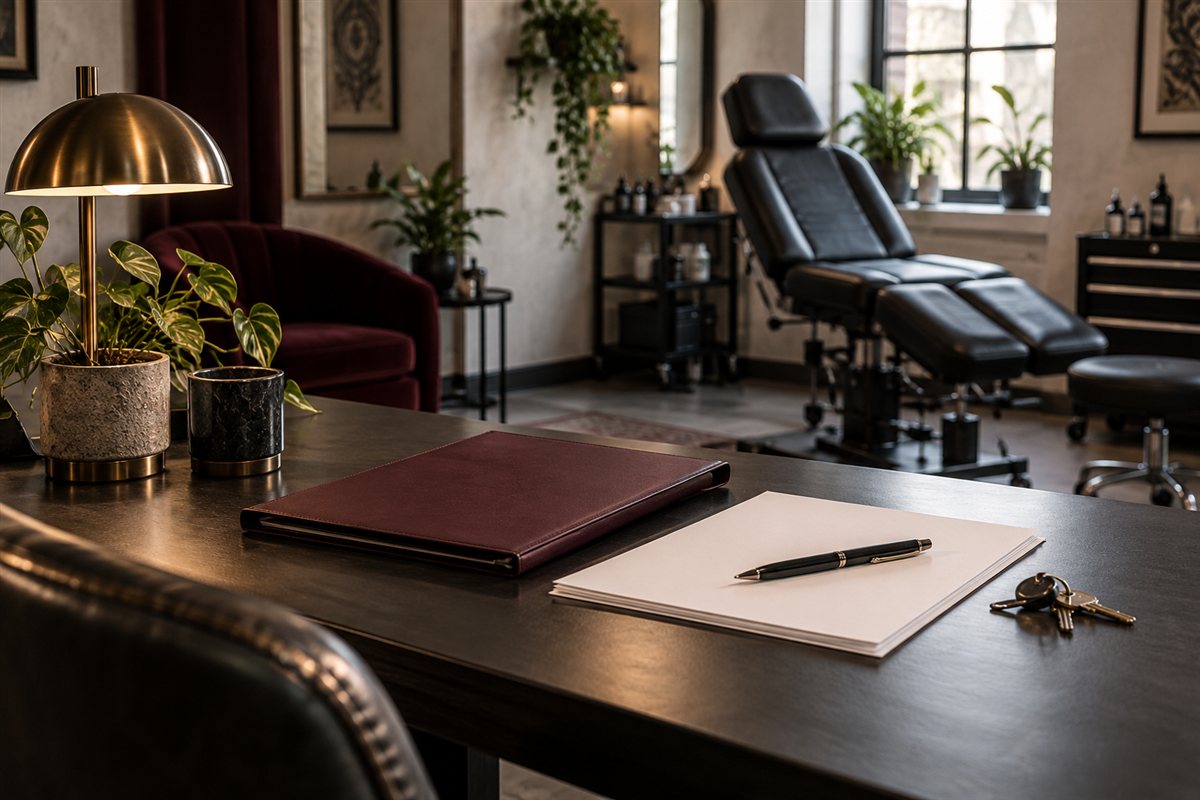
A practical opening sequence
| Stage | Prepare | Decision to settle |
|---|---|---|
| Budget | Opening purchases, ongoing commitments and a quieter-month plan | What can you afford before signing or ordering? |
| Location | Address, room plan and intended procedures | Which council regulates the premises? |
| Council discussion | Practitioner details and proposed use | Which registration, licence or approval applies? |
| Fit-out | Cleaning workflow, storage and treatment space | Can the room support your procedures? |
| Operating plan | Waste arrangements, records and written routines | Who owns each daily responsibility? |
| Business records | Income and spending records, registration questions | Which reporting requirements apply to your arrangement? |
| Opening | Completed approvals and staff preparation | Has the council confirmed what is needed before trading? |
Match the route to your nation
England commonly uses practitioner and premises registration, with a different special-treatments regime in much of London. Wales has a special-procedures licensing and premises-approval scheme. Scotland and Northern Ireland have their own arrangements. Use our licensing guide to identify the right starting point.
Plan the work before the shopping
Start a studio budget alongside the room plan. Keep one-off purchases separate from the services and consumables you will pay for repeatedly. Get quotes for the address and equipment you are considering so that the budget can change with your decisions.
Draw the route of clean stock, treatment equipment and used materials through the room. Discuss it with your council. Write down the questions that a floor plan cannot answer: where deliveries go, who replenishes supplies, and how a shared room is handed over between artists.
Keep one opening file
Include the practical arrangements that are easy to leave until late: sharps and waste collection, equipment compatibility and business records. These guides give you questions to settle with the council, supplier, contractor or adviser responsible for each part.
Keep council correspondence, application documents and supplier instructions together. Record unresolved points with an owner and a next action. This is a planning method, not a substitute for the council's inspection or professional training.
Before you book clients
Work through the studio licence checklist and the equipment list. Check with your council before announcing an opening date. Allow room in the schedule for revisions rather than treating an application receipt as permission.
Sources & further reading
Sources checked .